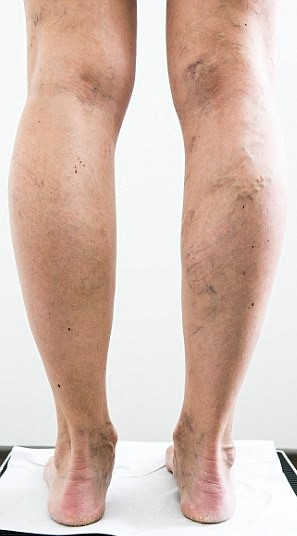
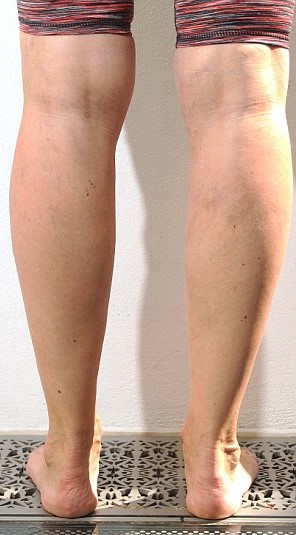
Patient Story: Julia Bradbury
TV Presenter Julia Bradbury underwent treatment for her varicose and thread veins with us at VeinCentre London. She very kindly sahred her story in the Daily Mail article and we often have patients enquiring as to exactly what treatment she underwent.
In summary, we first treated the underlying cause of her varicose veins with EVLA and, once we fixed the underlying cause, we started treating the varicosities on the outside of her legs using a combination of foam and micro-sclerotherapy (i.e. both the lumpy veins and thread veins). This treatment plan followed the NICE guidelines (National Institute of Health and Care Excellence) on how to manage varicose veins.
Julia, why did you seek treatment?
Julia: “I’ve been plagued by thread veins since I was in my 20s, but four months into my pregnancy with my twin girls Xanthe and Zena, who are now 15 months old, varicose veins started to emerge behind my knee and down my calves, and my legs looked like stilton. They were awful. I feared I’d never be able to wear a dress or skirt again. I’ve always consciously avoided short skirts and shorts and I became the mistress of disguise, wearing leggings and the right shirt, even on holiday. Having been through five gruelling rounds of IVF, I was keen to avoid anything that was particularly invasive or involved a general anaesthetic, which is why laser treatment offered by Dr. West’s clinic appealed.”
Stage 1: Consultation
Julia presented with large varicosities on her right leg and smaller ones on her left, especially low down. She had multiple thread veins on both legs.
A clinical examination and colour duplex ultrasound scan was performed on both of her legs to accurately determine the underlying sources causing her vein problems. Without this full and detailed scan, it is impossible to expertly assess the veins in order to determine the exact treatment required.
Julia’s scan revealed that the varicosities were being caused by faulty valves.
Stage 2: Primary Treatment
In order to fix the underlying cause of Julia’s veins, endovenous laser ablation (EVLA) was required. The EVLA procedure involves first numbing the area to be treated with local anaesthetic, inserting a thin laser fibre into the vein through a needle puncture which then heats up the vein wall and destroys it. A general anaesthetic is not required.
Julia commented: “It wasn’t painful, more like a tickling sensation. The worst part was the burning smell as the laser does its job. The initial session took about an hour and you get used to it.”
Following the treatment, Julia was had to wear class II compression stockings for a week. The stockings help reduce any post-procedure swelling and pain.
Stage 3: Follow-up
Julia attended her follow-up 6 weeks post-EVLA. She had no problems post-treatment. At this stage her veins hadn’t started to look any different; however, this is quite normal at this point (especially as the majority of her veins were thread veins). Sometimes the veins may disappear, or get smaller, but our experience is that the vast majority require direct treatment.
A repeat duplex ultrasound scan was performed, which confirmed that the EVLA treatment was successful.
At this point, Julia underwent her first session of foam sclerotherapy injections and microsclerotherapy injections to the visible veins.
Following this treatment, Julia had to wear her compression stockings for another week!
Around 6 weeks following this treatment, Julia commented: “I can’t boast that I’ve got flawless legs but the improvement is astonishing. I feel more confident about going bare-legged, which is brilliant now the summer is here. I don’t have to think about how best to disguise my legs and can wear dresses and skirts that are a bit shorter without feeling self-conscious. My legs feel smooth to the touch and I feel sure that this is a permanent solution to the problem that has plagued me for most of my adult life.”
Stage 4: Further sessions of sclerotherapy
Although Julia responded well to the first session of injections, she had quite extensive varicose and thread veins, so they were unable to be all be treated in one session. As such, Julia attended for several more sessions of injections to ‘tidy-up’ all the visible thread veins.
Due to the chemical within the sclerotherapy, there is a limit to how much we can safely inject in one go. We would love to be able to keep going until we’ve injected all the visible veins but, regrettably, we must stop injecting once we have reached the safety limit. If we haven’t managed to inject all the veins, it is likely that you will need to return again. Sometimes veins can also be particularly pesky and require two injection sessions to get the desired result.
Around 10% of our patients are like Julia in that they require additional sessions of injections after follow-up. At initial consultation, we encourage the consultant to inform you as best as they can about how many session you are likely to need. However, it is impossible to be accurate, as it is also dependent on how your own body reacts to the treatment.
The original Daily Mail article can be found here.