
Leg Ulcer Treatment
The below content has been medically reviewed and approved by Consultant Interventional Radiologist Dr. Mark Bratby (MBBS, MRCP, FRCR), Medical Director and Head of the Medical Advisory Committee at VeinCentre.
Last reviewed 16th December 2025.
At VeinCentre, we believe living with leg ulcers is a thing of the past. We have almost 20 years’ experience in treating venous leg ulcers via EVLA and foam sclerotherapy. Leg ulcers occur when the skin on the lower leg breaks down, exposing the tissue underneath. The vast majority of leg ulcers are caused by venous insufficiency, the same underlying cause of varicose veins.
These ulcers usually develop just above the ankle and can appear gradually, often starting as a small patch of irritated or discoloured skin. Without the right treatment, they may become open sores that are slow to heal.
Leg ulcers can come with a range of symptoms, including:
- Persistent itching
- Skin changes such as varicose eczema or darkened patches
- Hardening or thickening of the skin
- Swollen ankles or a feeling of heaviness in the legs
- Discharge from the wound in some cases, particularly if infection is present
If you notice any of these signs, it’s important to have them looked at by a specialist. At VeinCentre, we focus on treating the root cause to support proper healing and reduce the chances of the ulcer coming back.
How are Leg Ulcers Treated?
At VeinCentre, we believe that successful treatment of leg ulcers starts with understanding and addressing their root cause. In most cases, venous leg ulcers are caused by underlying vein problems, such as varicose veins or valve failure, which lead to poor circulation and increased pressure in the legs.
We use a walk-in, walk-out approach to treatment, focusing on procedures that get to the heart of the issue. If the ulcer is caused by faulty veins, we typically recommend endovenous laser ablation (EVLA), often followed by foam sclerotherapy. These minimally invasive treatments work by sealing off the damaged veins and redirecting blood flow to healthier ones, which allows the ulcer to heal properly. In most cases, healing is quicker and longer-lasting compared to traditional methods like compression bandaging alone.
Alongside treatment, we may recommend wearing compression stockings and making small lifestyle changes to support your recovery. Our goal is not just to heal the ulcer, but to prevent it from coming back.
We have 6 specialist ulcer centres offering this service:
Your Leg Ulcer Treatment in 3 Simple Steps
Treating leg ulcers at VeinCentre is a straightforward and supportive process, designed to deliver long-term results while keeping your comfort front and centre. From your first consultation to your final check-up, we make every step of your journey clear and stress-free. Our expert Vascular Consultants will guide you through each stage, tailoring your treatment to target the root cause of your ulcer and promote faster healing. Here’s what you can expect.

Step 1 – The VeinCentre Consultation
Your treatment journey begins with a consultation at VeinCentre, where your Vascular Consultant will carry out a simple Ankle Brachial Pressure Index (ABPI) test. This helps confirm whether the ulcer is venous in origin, as we exclusively treat venous leg ulcers. If the result indicates a venous cause, your Vascular Consultant will then carry out a colour duplex ultrasound scan. This scan shows the direction of blood flow in your veins and helps identify any varicose veins, that may be contributing to your ulcer.
We find that the majority of leg ulcers are caused by venous issues, and this scan is essential to understanding what’s going on beneath the surface. If the ulcer is found to be caused by something else, your Vascular Consultant will guide you on the next steps and where to go for further support. The results of your scan and tests will be discussed with you during the appointment, and you’ll leave with a clear, tailored treatment plan. The cost of this detailed consultation is £350.
Step 2 – Your Primary Treatment
If the scan confirms your leg ulcer is venous, your Vascular Consultant will recommend a suitable treatment to target the underlying cause. This is often Endovenous Laser Ablation (EVLA) to treat the affected veins, sometimes followed by foam sclerotherapy. These minimally invasive procedures help improve circulation and allow your ulcer to begin healing more effectively.
Once the varicose veins have been treated, most ulcers begin to heal significantly faster. The skin will gradually repair, any eczema or inflammation should settle, and the affected area will become healthier and more comfortable. In some cases, depending on how long the ulcer has been present, there may be some residual pigmentation or scarring.

Step 3 – Follow Up Appointment
Six to eight weeks after your procedure, we’ll invite you back for a follow-up appointment. During this visit, your Vascular Consultant will perform another ultrasound scan to make sure the underlying problem has been successfully resolved.
If there are any residual surface veins, further treatment such as foam sclerotherapy may be recommended to enhance your final results. This ensures the best possible long-term outcome and helps reduce the chance of the ulcer returning.
Types of Leg Ulcer Treatment
Treating leg ulcers effectively means addressing both the visible symptoms and the root cause. At VeinCentre, we specialise in treating venous leg ulcers, which occur when faulty valves in the veins lead to poor blood flow and increased pressure in the lower leg. By treating the underlying cause, rather than just the surface symptoms, we can achieve better healing and reduce the chance of recurrence.
Treatment Type: Endovenous Laser Ablation (EVLA)
EVLA is one of the most effective treatments for venous ulcers. This minimally invasive procedure uses laser energy to close off the faulty veins that are contributing to the ulcer. By sealing these veins, we improve circulation and relieve pressure, allowing the ulcer to begin healing. EVLA is performed under local anaesthetic and is a walk-in, walk-out treatment.
Treatment Type: Foam Sclerotherapy
Foam Sclerotherapy is usually used alongside EVLA to target the visible veins on the legs. This technique involves injecting a special foam into the affected veins, which irritates the lining and causes them to close. The body then naturally absorbs the sealed veins over time.
By tailoring treatment to your specific needs and targeting the root cause of venous ulcers, we can support faster healing and reduce the likelihood of recurrence. Your dedicated Vascular Consultant will guide you every step of the way.
Leg Ulcer Treatment Prices
As the UK’s largest network of specialist vein clinics, we pride ourselves on transparent, fixed pricing – no ‘from’ prices or hidden fees. You will get the full price of your treatment after the consultation. Please find our prices below, or view our leg ulcers treatment cost page.
1.
The VeinCentre Consultation
1-on-1 time with your Vascular Consultant
Comprehensive ultrasound scan
ABPI test
Personalised treatment plan
£350
2.
Treatment
EVLA addresses the root cause of varicose veins, while foam sclerotherapy targets visible veins, allowing the ulcer to start healing
NICE-endorsed as the treatment choice
Quick, walk-in, walk-out procedure with a 99% success rate
One Leg
£2,650
Both Legs
£3,600
3.
Follow Up
Includes another scan of your legs to check results
If needed, foam sclerotherapy to treat remaining visible veins
£250
Total
One Leg
£3,250
Both Legs
£4,200
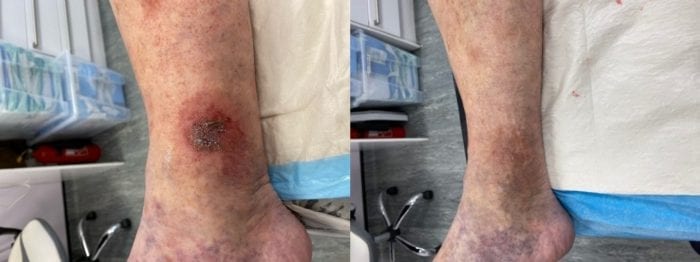
Leg Ulcer Treatment – Before & After
At VeinCentre, we’re proud to support patients through this journey. Many people are surprised by how quickly their ulcers begin to heal following treatment. We regularly hear that the biggest transformation isn’t just in the leg itself, but in how people feel – more mobile, more confident, and free from the pain and dressing routines that once defined their day.
Explore our before and after images to see real results from patients who’ve had their leg ulcers successfully treated by our expert Vascular Consultants. Each image tells a story of recovery and renewed independence.
 1
1
Complete Quick Online Assessment
Are There Any Risks With Leg Ulcer Treatment?
All medical procedures carry some level of risk, and it’s important to feel informed and supported at every stage. At VeinCentre, we focus on safe, minimally invasive treatments delivered by experienced Vascular Consultants, using leading diagnostic technology to reduce potential complications.
The most common treatment for venous leg ulcers is Endovenous Laser Ablation (EVLA). This is a walk-in, walk-out procedure that is widely regarded as safe and effective. Side effects can include mild bruising, tenderness or tightness in the treated area, but these usually settle within a few days. Occasionally, patients may experience a temporary sensation of numbness, inflammation or skin pigmentation along the treated vein, but serious complications are rare.
Foam sclerotherapy or avulsions may also be used in some cases to support ulcer healing. These methods are generally well-tolerated, though they too carry a small risk of side effects such as skin staining or inflammation at the injection site. Your Consultant will talk you through any risks ahead of treatment and provide clear aftercare instructions to support your recovery.
With careful planning, expert care and high safety standards, we aim to make your experience as smooth and reassuring as possible.
Leg Ulcer Treatment Aftercare
Recovering from leg ulcer treatment is a crucial part of your journey, and we’re here to support you every step of the way. Once the underlying venous cause has been treated, your skin will begin to repair itself – but giving it the right care can make all the difference. In the days and weeks after treatment, it’s important to follow your Consultant’s guidance closely and give your leg time to heal.
You may be advised to wear a compression stocking to help maintain healthy circulation and support the healing process. Keeping the area clean and dry, attending any follow-up appointments, and walking daily will all support recovery. Try to elevate your leg when resting, avoid standing still for long periods, and aim to keep active with gentle movement. Most patients find that by taking these small daily steps, their ulcers continue to improve steadily and their overall leg health returns to normal. If you have any concerns during recovery, our team is always on hand to help.
