
Thermocoagulation
The below content has been medically reviewed and approved by Vein Specialist Mrs Helen Burndred at VeinCentre.
Last reviewed 16th December 2025.
What is Thermocoagulation?
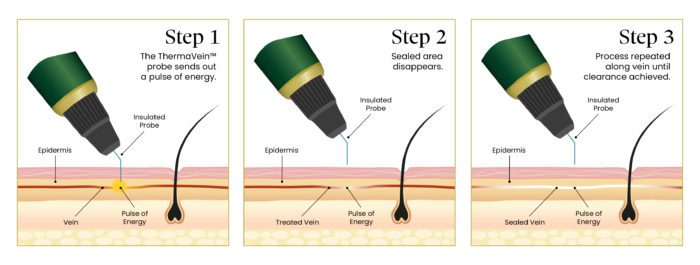
Thermocoagulation is a leading treatment for facial thread veins, offering a safe, effective and non-invasive solution. The treatment uses a small needle (which looks like a pen) to apply heat to the vein, causing it to seal with minimal aftercare.
While thermocoagulation is most commonly used to treat thread veins on the face, it can also be helpful in certain cases on the legs, especially where the veins are too fine for microsclerotherapy or haven’t responded to previous treatment. However, microsclerotherapy remains the recommended option for most leg thread veins.
How Does Thermocoagulation Work on Thread Veins?
The VeinCentre Consultation
Your journey begins with a friendly consultation with one of our experienced specialist nurses. We’ll take the time to understand your skin concerns, discuss your goals, and carefully examine the areas you’d like treated.
We’ll guide you through the process step by step, explaining how the treatment works and what to expect before, during, and after your session. There’s no need for local anaesthetic and no special preparation, but make up will need to be remove from the treated areas. If thermocoagulation is suitable for you, we’ll create a personalised treatment plan to help you achieve the best results.
Most patients require a minimum of two sessions, and your Nurse will advise the exact number based on your individual needs.
The Procedure
Thermocoagulation works by delivering precise bursts of heat through a very fine needle that gently touches the surface of your skin. The heat is generated by microwave energy and causes the treated thread veins to close off, without damaging the surrounding skin.
You may feel a mild pricking sensation as the needle is applied and as the energy is delivered. The nurse will treat each vein by placing the tip of the needle along its path in 2-3mm increments, with most veins disappearing instantly. Each treatment session takes around 30 minutes.
Post-procedure
After your treatment, there’s no downtime – you can get straight back to your normal routine, avoiding any activity that can make you hot and sweaty. You may notice a little redness or swelling in the treated areas, but this usually settles within a couple of days but can take a couple of weeks. We’ll talk you through any gentle aftercare needed and let you know what to expect over the coming days.
If you require further sessions, we’ll space them out appropriately to ensure your skin has time to settle and to monitor your progress. Our team is always on hand to answer any questions and support you throughout your treatment journey.
Complete Quick Online Assessment
Thermocoagulation Treatment Cost
We understand how important it is to have clear, upfront pricing before making any decisions about your treatment. That’s why our thermocoagulation pricing is fixed and transparent – no hidden extras or vague “from” costs.
If you’re ready to take the first step towards clearer, more confident skin, we’re here to help. Book your consultation today.
What are the Risks Associated with Thermocoagulation?
Like any medical procedure, thermocoagulation carries some potential risks, but it is widely regarded as a safe and gentle treatment. Most side effects are mild and temporary. You may notice small scabs that resemble fine scratches, or some mild redness and bruising in the treated area. These effects usually fade quickly on their own.
In rare cases, there can be some hyper pigmentation left where the veins were which will fade gradually over time. Importantly thermocoagulation does not carry the risk of skin staining and does not damage the surrounding tissue. No serious complications have been reported. During your consultation, your specialist nurse will talk you through everything so you know exactly what to expect.
Thermocoagulation Aftercare
After treatment, it is normal for the area to appear red and feel warm. This is your skin’s natural response to the heat used during thermocoagulation and usually settles within a few days. Some people may notice dryness on the treated area, which is part of the normal healing process.
While thermocoagulation requires minimal aftercare, there are a few simple steps to support a smooth recovery:
For the first 48 hours:
-
- Avoid applying makeup. If needed, light makeup can be used after 24 hours.
- Wash the treated area gently without rubbing or scrubbing.
- Refrain from stretching the skin.
- Avoid alcohol and spicy food, particularly if you are prone to flushing.
- Limit heavy exercise or activities that cause sweating or increase blood flow to the face.
- Apply aloe vera gel to soothe the skin.
After the inirial healing phase:
- Use a good broad spectrum SPF to protect your skin from UV exposure.
- Avoid using sunbeds.
- Hold off on harsh cleansing, steaming or exfoliating for the first week.
- Choose gentle skincare products.
- Use lukewarm water when washing your face or showering.
- Be mindful not to pull or stretch the skin for the first week following treatment.
Your specialist nurse will provide personalised aftercare advice during your appointment. If you have any concerns or questions, our team is here to support you.
